




Biodiesel Production – Why Biodiesel is (part of) the Answer
We believe that the burning of fossil fuels is a problem because fossil fuels are finite, they add significantly to pollution, and they generally come from locations outside US borders, presenting us with a ever increasing "access" and "cost" problem. Switching to biodiesel will solve and/or reduce many of those problems. If you don't know much about biodiesel production and why it's so much better than normal diesel, let us help you out.
The Diesel Engine Problem
More than 60 billion gallons of diesel were consumed in the US last year
- Economic cost = approximately $180 billion
- Environmental impact = 660 million tons of CO2
- Substantially negative health impact of diesel emissions – 10x higher cancer risk than all other hazardous air pollutants combined
- The rest of the world is far more diesel centric – especially emerging economies R.O.W. consumed over 160 billion gallons worth almost $500 billion and responsible for over 1.76 billion tons of CO2
- By 2020 it is projected that more than 1 billion cars will be on the road
This is a global issue that creates a global opportunity.
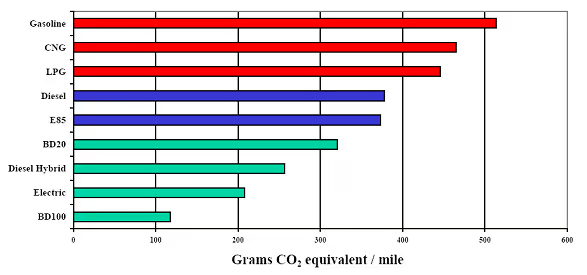
How Beneficial is Biodiesel?

Average biodiesel emissions compared to conventional diesel*
Garbage truck equivalent metrics:
Average garbage truck travels 25K miles/yr and gets 3mpg
- 92.5 tons of CO2/truck/yr
- Cost to switch to biodiesel = $0.00
- Every 100 trucks converted to B-100 reduces CO2 by 14.4MM pounds
* Source: EPA, NREL
To learn about how you or your business can start biodiesel production with a fully automated biodiesel processor check out the BioPro line of biodiesel processors.
Frequently asked questions
Why is switching from petroleum diesel to biodiesel considered important?
Petroleum diesel is a finite fossil fuel, it adds significantly to pollution, and much of it comes from outside U.S. borders, creating ongoing access and cost problems. U.S. diesel consumption has been estimated at more than 60 billion gallons a year, costing roughly $180 billion and emitting about 660 million tons of CO2.
Diesel exhaust also carries a substantial health impact. Biodiesel, made from renewable oils, reduces or solves many of these problems.
How much CO2 could a garbage truck fleet save by switching to B100 biodiesel?
Every 100 garbage trucks converted to B100 reduces CO2 emissions by about 14.4 million pounds per year. That estimate is based on an average truck traveling 25,000 miles a year at 3 miles per gallon and producing about 92.5 tons of CO2 annually on diesel.
Because biodiesel runs in unmodified diesel engines, the vehicle cost to switch is essentially zero; the fuel itself is the only change.
Does biodiesel reduce dependence on imported oil?
Yes. Biodiesel is made from domestic vegetable oils, animal fats and recycled cooking oil rather than crude oil, so every gallon produced locally replaces a gallon of petroleum diesel that may have been imported.
Producing fuel on site with a small-scale processor goes a step further, turning a local waste stream such as used cooking oil into fuel for the same business, farm or municipality that generated it.
How can a business start producing its own biodiesel?
The simplest route is a fully automated processor such as a BioPro, paired with a reliable source of feedstock, typically used cooking oil. A BioPro 190 makes 50 gallons per batch and a BioPro 380 makes 100 gallons, with hands-on time of about 30 minutes per batch.
Start by estimating how much oil you can collect each week, confirming you have suitable space and power, and planning for safe methanol storage and handling.



.svg)
